logo
HomeAboutAward TrusteesAward CategoriesPrevious EditionsAward PublicationsMedia CenterContact Us
Award GuideApply Now
Address

Sharjah Institute for Heritage, University City, Sharjah, United Arab Emirates.

Open in Google Maps
Contact us
Address

Sharjah Institute for Heritage, University City, Sharjah, United Arab Emirates.

Phone
+97165014999
Fax

+97165092606

Email
[email protected]
facebooktwitterinstagram
|
PRO71Designed by PRO71
All Rights Reserved – The Award
Home
Publications
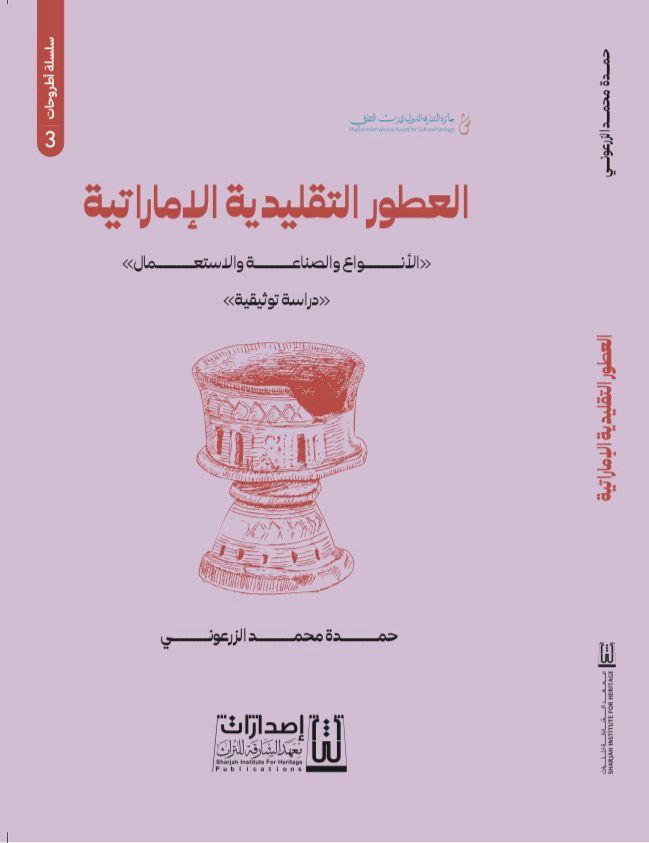
Traditional Emirati perfumes: types, production, and uses

Traditional Emirati perfumes: types, production, and uses

Author: Hamda Mohammed Al Zarouni

Best Local Research and Studies - Fourth Edition

About this Book

Perfumes carry a rich history and a captivating aroma that have influenced human civilizations, shaping both the tangible and intangible aspects of human existence and the progress of societies. These aromatic fragrances hold a unique ability to evoke memories, thoughts, and specific moments, while also aiding in achieving mental clarity. Fragrance becomes a constant presence in a person's journey, accompanying them through life and even in death, through moments of happiness and sorrow. Its impact extends deep into emotions, moods, and cognitive processes.

Traditional Emirati perfumes and fragrances have long held a significant social and economic standing, deeply rooted in families who have preserved their craft and production techniques over generations. This heritage has ensured their enduring presence, even though they remain rare, particularly those crafted by Emirati hands. What truly sets these local perfumes apart are the closely guarded secrets behind their creation.

As our lives continue to evolve rapidly toward modernity, prosperity, and globalization, we remain committed to safeguarding our customs, traditions, and rich, inherited heritage to the greatest extent possible.

In this context, dedicating a documentary study to traditional Emirati aromatic materials and perfumes becomes essential. Drawing insights from the target group and information gathered through interview questionnaires, this field study serves as a valuable resource for collecting and documenting everything connected to traditional Emirati scents—from popular memory to the expertise of researchers and cultural heritage specialists. By addressing this overlooked area, the study aims to bridge a long-standing gap in research and preserve an important aspect of cultural identity.

About the Author

Hamda Mohammed Al Zarouni, from Sharjah, UAE, is a dedicated researcher specializing in history and cultural heritage. She currently serves in an executive administrative role at the Sharjah Institute for Heritage. She obtained three master’s degrees: a Master of Arts in Cultural Heritage Conservation Management specializing in Museum Management (graduating with distinction) in 2022 from the University of Sharjah in collaboration with ICCROM; a Master of Arts in Management and Strategy (graded very good) in 2021 from Al Afaq University College; and a Master of Arts in the History of Islamic Civilization (earned with honors and as the top of her class) in 2017 from the University of Sharjah. Additionally, she holds a Bachelor of Arts in Public Relations from the University of Sharjah, completed in 2013.

Hamda's works: two books titled "Entertainment in Iraq and the Levant" (2021) and "Manifestations of Textile Art in Arab Heritage Sources" (2023), as well as a range of scholarly articles. Participated at the ALECSO Forum for Young Researchers in Cultural Heritage held in Tunisia in 2024, with a paper focused on sustainable cultural heritage.

Author

Hamda Mohammed Al Zarouni

Publish Date

May 21, 2025

Pages

648

ISBN

978-9948-769-32-3

Language

Arabic

Related Publications

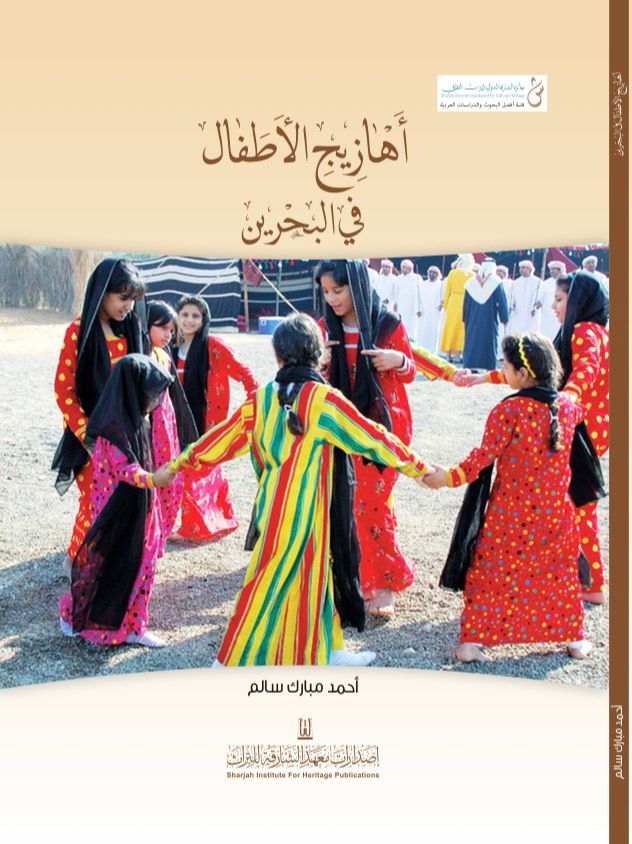
Children’s Chants in Bahrain

Children’s Chants in Bahrain

Ahmed Mubarak Salem

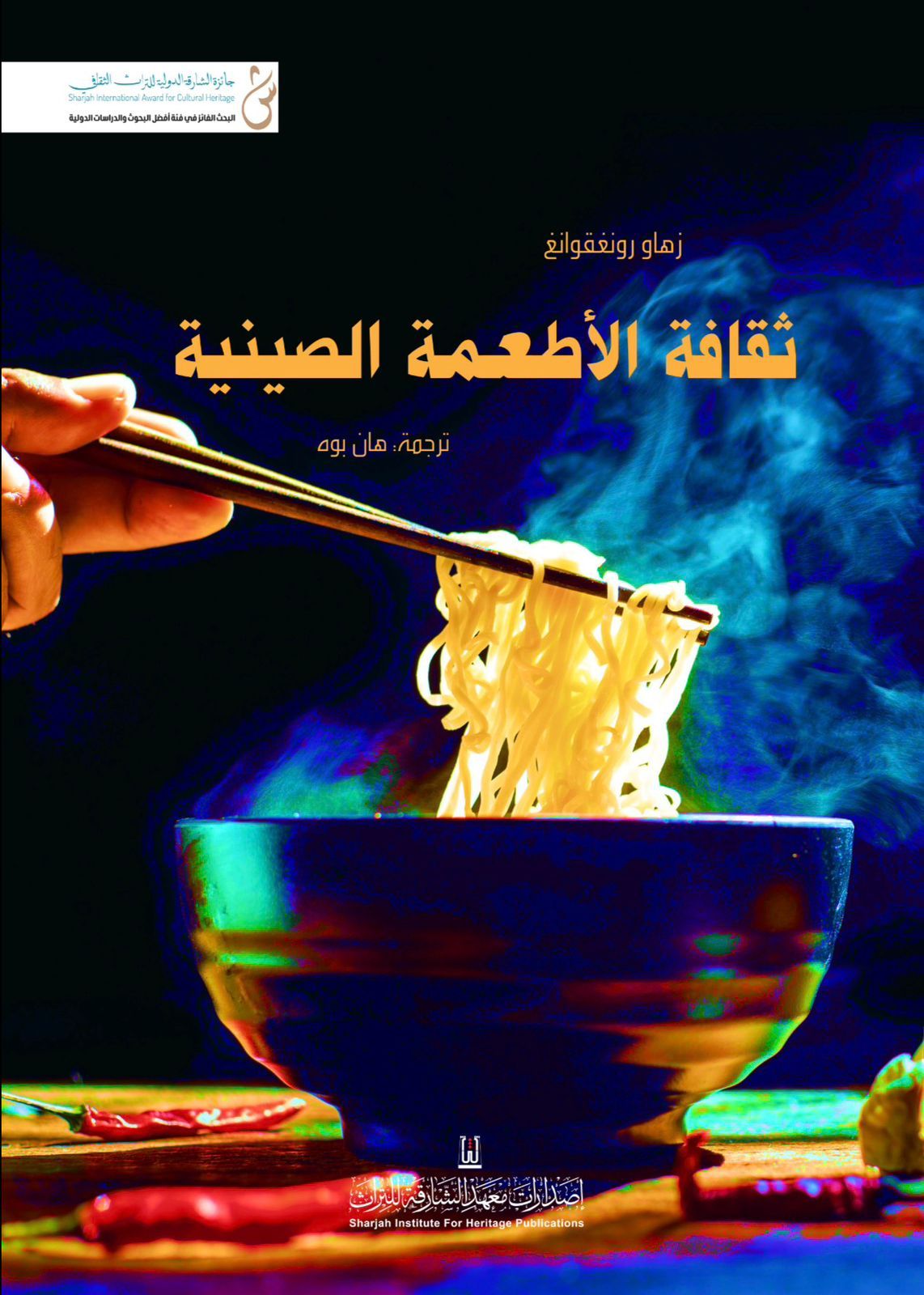
Chinese Food Culture

Chinese Food Culture

Zhao Rongguang, translated by Han Bo

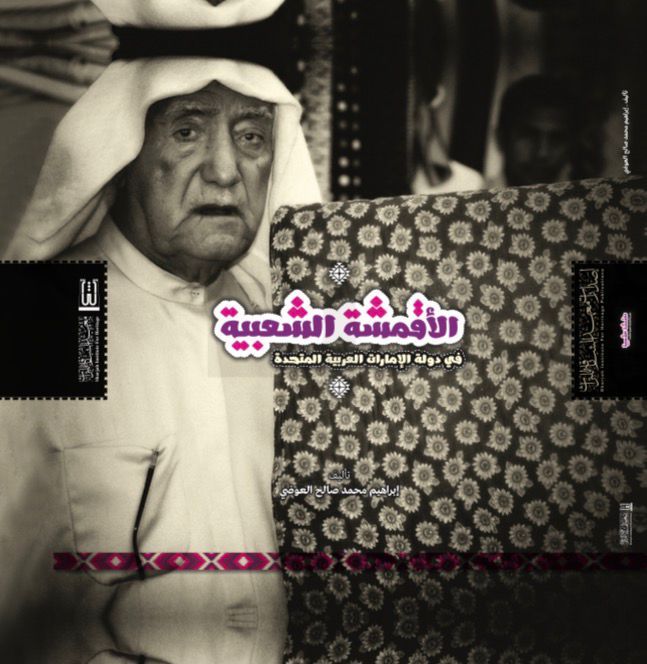
Folk fabrics in the United Arab Emirates

Folk fabrics in the United Arab Emirates

Ibrahim Mohammed Saleh Al Awadhi

Back to Publications